
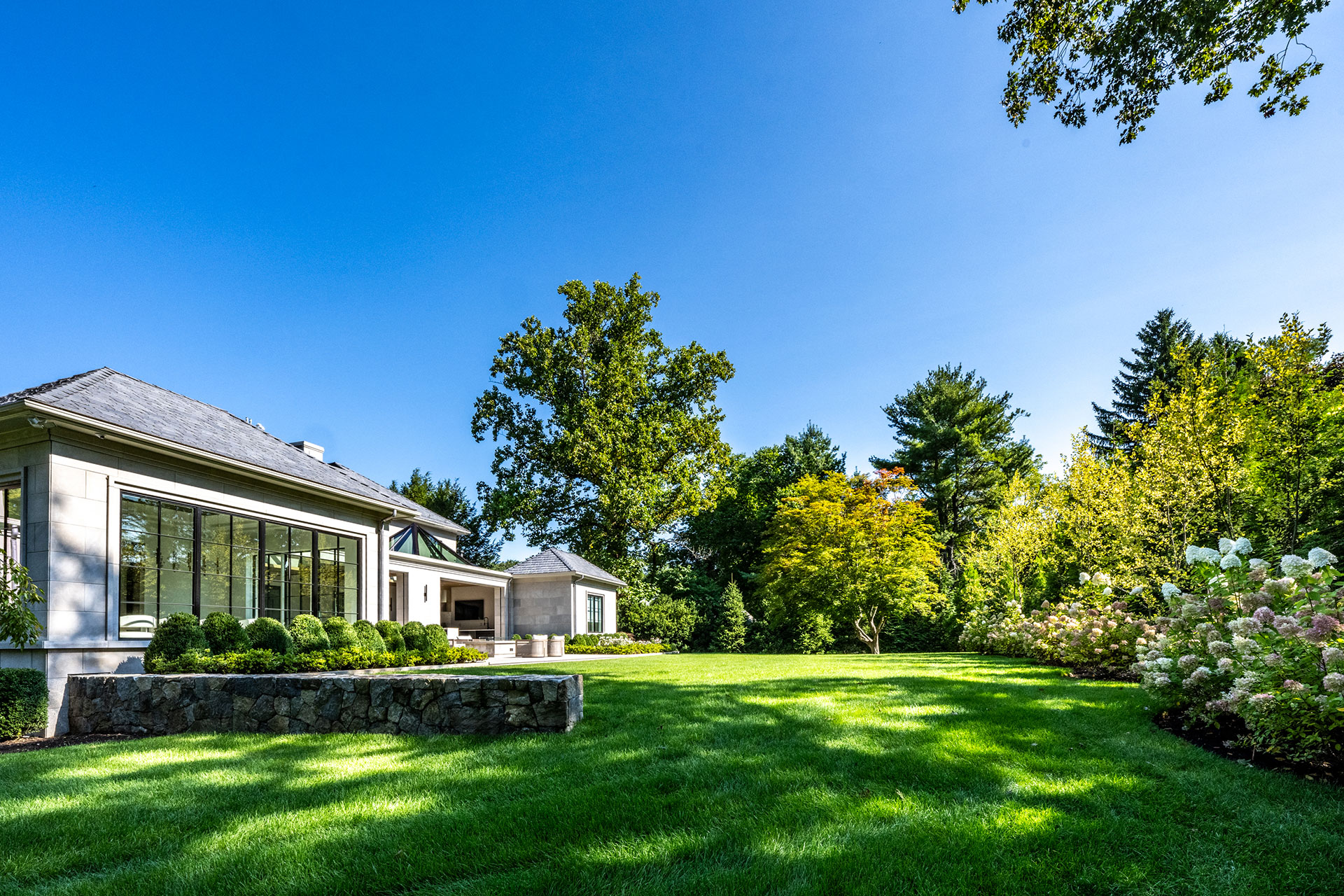
As a professional landscaper, I plant throughout the growing season, but if you were to ask me the best time for homeowners to plant grass, shrubs, or trees, I’d say fall. That doesn’t mean you can’t plant at other times of year; you certainly can, but late summer and fall offer ideal conditions. The soil is still warm enough to encourage root growth, while the cooler temperatures and increased moisture reduce the stress caused by summer heat and dryness.
Lawn Repair
Fall is arguably the best time to seed or repair a lawn. Before seeding, rake bare areas thoroughly to loosen compacted soil. Apply grass seed along with a starter fertilizer and gently rake the seed into the surface. It’s important to give the seed solid soil contact – but don’t bury it – on top or no more than a quarter inch of soil is what you want.
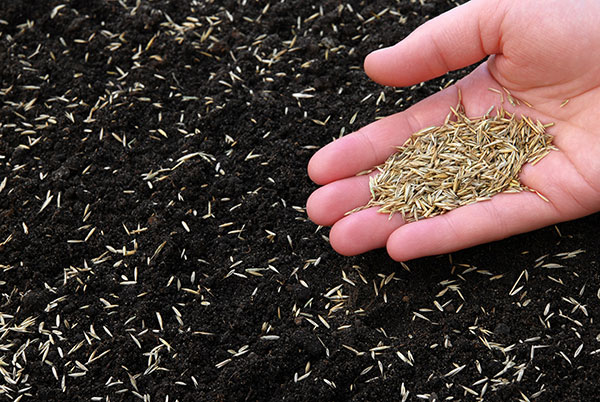
Consider covering newly seeded areas with a light seed blanket or in areas prone to run-off use erosion-control material such as burlap. This helps keep the soil and seed in place while also holding moisture.
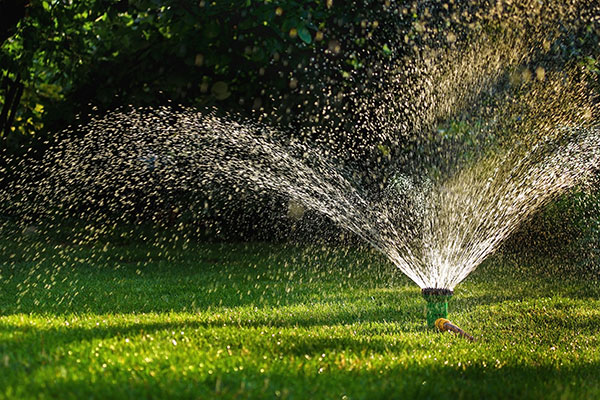
Water lightly every day or two, keeping the soil moist while the seed germinates, and continue watering after the grass begins to grow. New grass needs consistent moisture, so staying on top of watering will make a big difference in the results.
Shrubs
Planting shrubs in the fall gives roots time to establish before winter and sets them up for a strong start in spring. Dig the hole about twice as wide as the root ball, but no deeper, and make sure the base of the stem sits at or slightly above the surrounding soil.
If the shrub came in a container, loosen or pull apart any roots that are circling the outside of the root ball so they’ll grow outward into the surrounding soil. For balled/burlapped shrubs, remove as much burlap, twine, and wire as practical once the plant is positioned in the hole. Always pick up the shrub by the root ball rather than by the stem or branches to avoid damaging the plant.
Water thoroughly after planting and continue watering as needed until the ground freezes. Finish with 2–3 inches of mulch to retain moisture and protect the roots, keeping it away from the stems.
Trees
Planting a tree is similar to planting a shrub, with a couple of additional considerations. Before putting it in the hole, take a moment to look at the tree from different directions and decide which side you want facing your primary viewing area. That will make a big difference in how the tree fits into the landscape a few years from now.
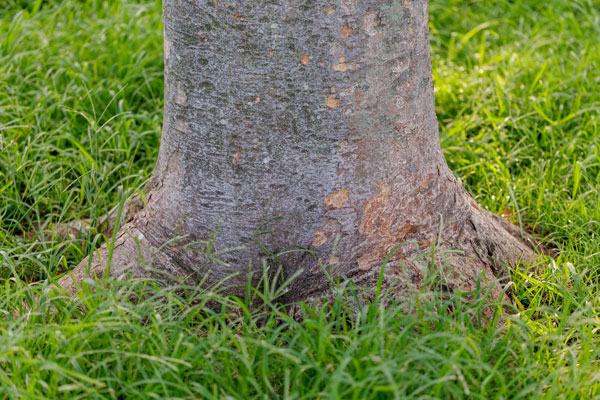
Most importantly, don’t plant a tree too deeply. The picture below shows a very common mistake – the hole is too small and the tree is sitting too low in the ground – it is unlikely this tree will do well.
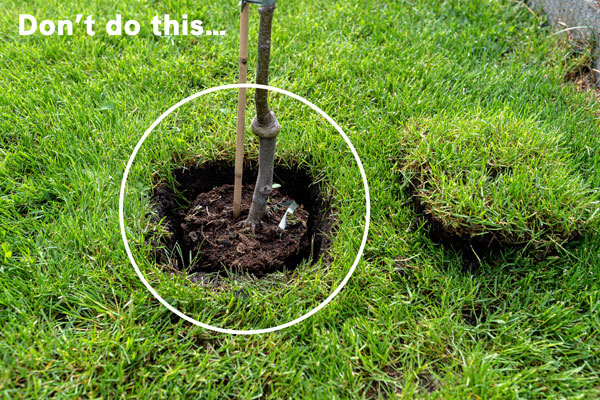
The root flare—where the trunk begins to widen into the roots at the very base —should remain visible above the surrounding soil. If you mulch, keep it away from the trunk rather than piling it up around the base – “mulch volcanos” can eventually kill your tree.
Good soil preparation, proper planting depth, mulch, and consistent watering are the keys to getting new plants established. With warm soil, cooler air, and less stress from summer heat, fall gives lawns, shrubs, and trees some of the best conditions of the year to establish strong roots—setting the stage for healthier growth next spring and for years to come.
Pro Planting Tips
- When digging the hole go wide rather than deep – that makes it easier for new roots to spread into the surrounding soil.
- Backfill trees and shrubs with the soil you removed from the hole. Amend with 10% compost if your soil is poor. Don’t replace the native soil or throw fertilizer in the hole.
- Thoroughly water in trees and shrubs as soon as they are planted. Ongoing — set your hose to a trickle for 20–30 min so the water sinks down into the roots rather than running off.